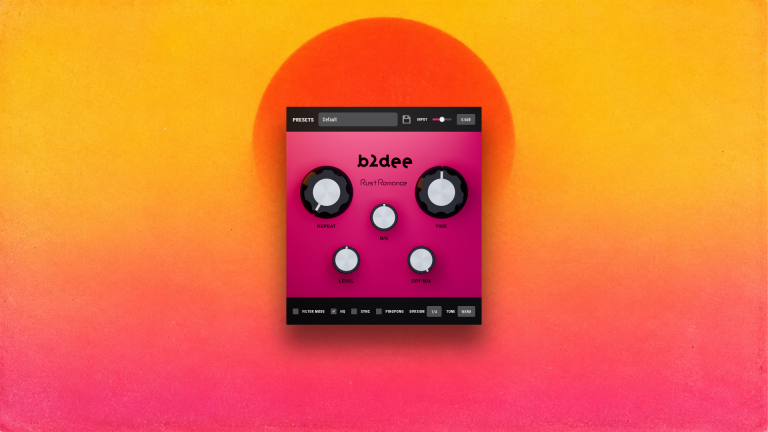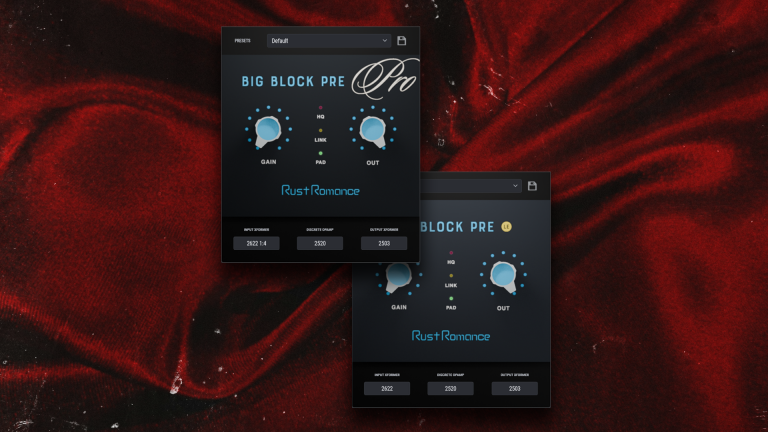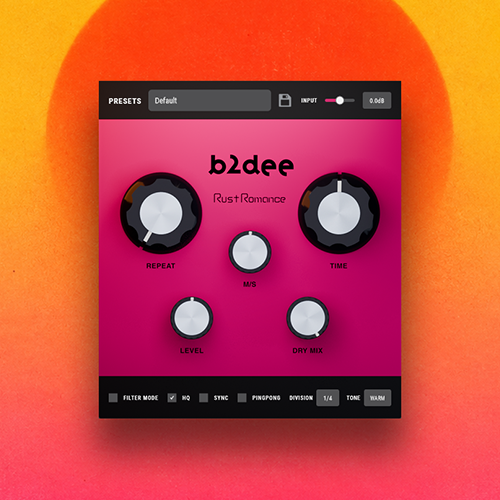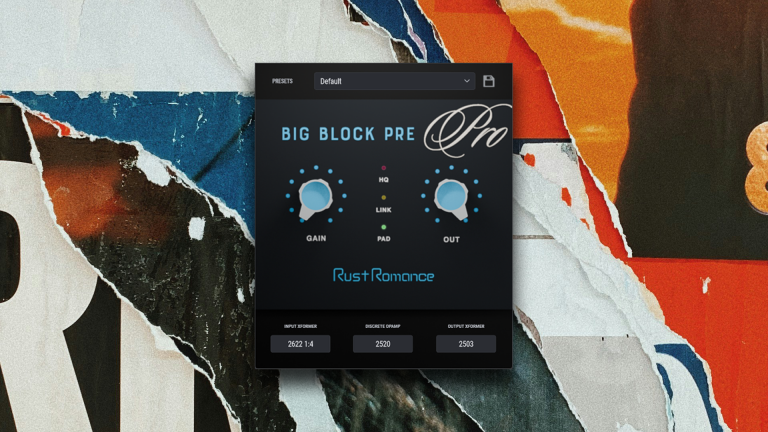
Thank you, vibe coders. And thank you to all the slop audio plugins brought into this world by AI.
KVR’s new-product listings are overflowing with audio plugins that, I suspect, have been churned out with very little care.
Tomislav Zlatic over at Bedroom Producers Blog also seems pretty exhausted by the daily flood of messages about plugins made with AI.
KVR’s new-product section, in particular, can drive an enormous amount of traffic. It has sent a great deal of traffic to RustRomance, too, and I’m genuinely grateful for that.
The same goes for BPB. And Rekkerd, too. Seriously, thank you.
Now, apparently, KVR has introduced a review process to decide whether products from developers who registered in January 2026 or later will appear in its news listings.
That will presumably apply to RustRomance as well, since we registered as a developer after January 2026.
But it’s not as though I’m sitting here thinking, “I have to crank out audio plugins as fast as possible and monetize them right now!”
Of course I want money. I’m human.
But I have absolutely no desire to make money while people say, “Come on, the stuff you make is just AI-generated slop, isn’t it?”
What’s the fun in making a few quick bucks for a moment if that’s how people see you? I love J Dilla, for example. Apparently, while he was alive, he’d wake up in the morning and make beats until he went to bed.
That’s more or less the spirit of what I want to do with RustRomance. I want to keep working on sound until I’m genuinely satisfied with it.
There’s No Reason Not to Use AI for Programming, But…
I’m 45 now. The first time I wrote “Hello, world!” in Java was exactly 20 years ago, when I was 25.
Looking back, I’ve made my living as a web programmer for 20 years.
Audio and visual programming, honestly, were more like hobbies for me. The things I made without AI were pretty cheap and rudimentary.
I might as well be honest about that.
I don’t consider myself an exceptionally talented programmer. In fact, there have always been plenty of programmers around me who were considerably better than I was, and every now and then I’d meet someone who seemed like an unbelievable wizard.
So, when AI came along, by 2026 I was paying a fairly substantial amount for Claude Code and had started vibe coding.
Naturally, I began using AI in my main line of work, web development, too. I’m Japanese and I live in Japan, and it didn’t take long for the rates I could charge to drop.
The rates went down, but there was no denying that I could get work done faster than before.
Well, so be it. If this cutting-edge technology was going to change things anyway, maybe I could use it to do something I loved more. That thought was what led to RustRomance.
I’ve always enjoyed modifying and building audio gear. Even before tools like SoundID Reference became mainstream, I was measuring and tuning my speakers. There was even a period when I worked on club sound systems.
Before becoming a programmer, I mainly worked as a live-sound engineer. I play instruments, and I make beats, too.
Anyway, for an unremarkable programmer like me, AI’s coding ability looked absolutely incredible.
In the old days, building a single screen could leave me exhausted. AI, on the other hand, seemed to implement feature after feature effortlessly, like magic.
Of course, the reality wasn’t quite that dreamlike. There were all kinds of problems.
Ask it to run tests and it might pull something utterly useless, like writing an exam for which it had already made up the answers. It would casually do things so shady that a human programmer would be fired on the spot.
And with every new version, it gets smarter while something else breaks. You can’t count on it to deliver the same quality of work every day. It bluffs without hesitation, and it lies without hesitation.
Still, the programmers around me, myself included, started using AI more and more. Before I knew it, even programmers who had initially hated AI were barely typing source code themselves anymore.
When you’re being paid to deliver something, and a tool makes the work more efficient, you inevitably end up using it.
I mean, I assume most of you drive cars. You don’t seriously consider going back to living on horseback, do you?
If you need to drill a hole in a piece of wood, your arm will get tired without a power drill. If you want to light a cigarette, having a lighter is pretty convenient. Only a handful of eccentrics would think of starting a fire by rubbing a stick between their hands. It’s absurd, right?
That’s the thing about AI: it’s incredibly useful, but it’s also incredibly stupid. So of course stupid people are going to find stupid ways to use it. Hardly a surprising development.
Are RustRomance Plugins Slop, Too? Maybe. Or Maybe Not.
Maybe they are, or maybe they aren’t. Sigh. Oh well. That’s a phrase the great Japanese novelist Haruki Murakami likes to use. It originally comes from Philip Marlowe, though. Murakami also translated The Big Sleep into Japanese.
Sorry. Completely beside the point.
Right. Whether an audio plugin is slop.
For example, I once bought a vaporwave-style synthesizer on Gumroad.
Judging by its demo video, it sounded cheap. It had these wonderfully trashy sounds that a company like u-he would never dream of making, and I absolutely loved it.
I followed the URL in the YouTube description and bought the synth. I installed it, but I couldn’t even get a glimpse of its cheap-looking UI in Ableton Live.
Because it wouldn’t launch.
The good news was that it only cost about $29, the developer gave me a refund right away, and the yen hadn’t fallen nearly as far back then.
If it had worked, I would have happily used it. Unfortunately, it didn’t.
My point is that “slop” doesn’t refer exclusively to software made by AI.
There’s nothing unusual about lousy applications existing in the world. Or about people putting price tags on them.
The indie-plugin world has always had its share of products that look as though they were thrown together in something like SynthEdit—easy enough to make, yet somehow they don’t even work properly.
So if someone wanted to pick apart everything wrong with my plugins, I suppose they could call them slop, too.
I do read the messages that come into our support inbox. So far, apart from a report that one wouldn’t run on an old Intel Mac we don’t support, things seem to be okay. At least according to the reports I’ve received.
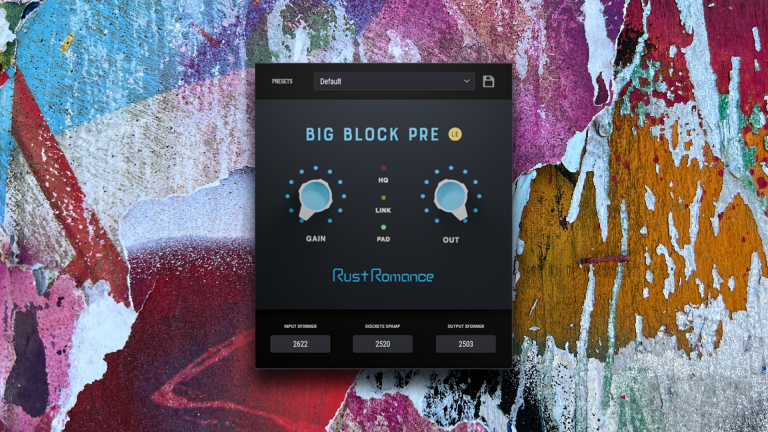
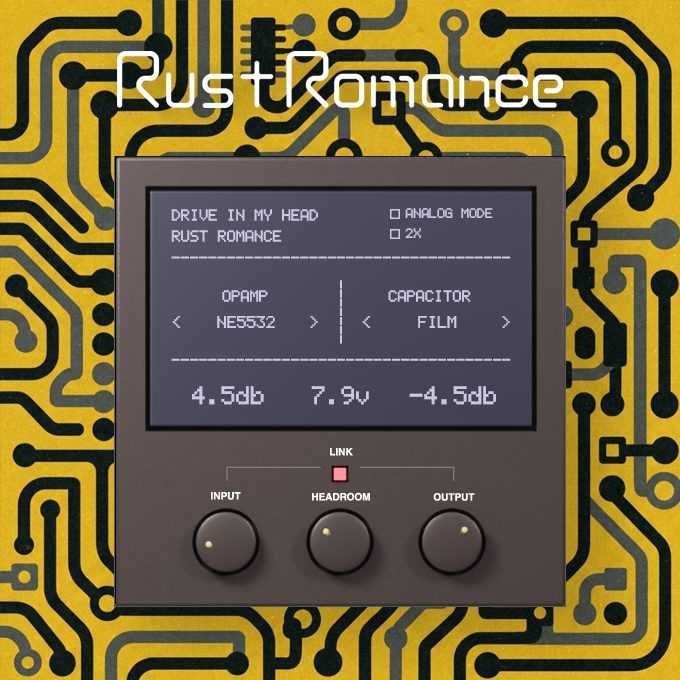
After all, Drive in my head and BigBlockPre LE have been downloaded more than 3,000 times combined, and so far, so good.
Drive in my head is also available on MuseHub, where I think it’s been downloaded around 1,000 times. I haven’t received any reports of it failing to run there, either.
Even so, RustRomance is still “a new indie audio-plugin maker whose products were born through AI-assisted vibe coding.” That means we could end up being shut out of KVR, too.
Maybe BPB won’t feature us the way it used to, either.
But there are people whose livelihoods depend on this more than mine does, and people who have been developing plugins seriously for far longer than I have. If that’s what happens, then so be it.
We need to show respect for the community. That’s how I see it.
I Don’t Resent Those Idiots One Bit
That said, I have nothing but gratitude for those wonderful new AI-powered plugin companies capable of releasing 50 products in a single month. Sure, they’ve made it much harder to discover genuinely interesting new products.
But thanks to all of you churning out products by the truckload, I’ve remembered something important.
At this point, the most important thing about making and distributing plugins is simply to keep improving the quality of what you’ve already released.
Making new products is fun. But the plugins I’ve loved and used for years have been supported by a steady stream of solid updates.
With Waves plugins, I bet you could open a project from 20 years ago and they’d still work.
That kind of commitment is what matters.
I have no intention of selling people garbage and then disappearing with their money.
Of course I want money, and of course I want recognition. But I think I understand that earning users’ trust is part of achieving either of those things.
I live in the country of Toyota and Sony—not to mention Roland and Korg—so I believe that kind of patient, dependable support is extremely important.
I preordered my SP-404MKII before it was released, and the unit that arrived had a problem. I posted on X about how honestly disappointed I was. Roland sent me a DM almost immediately, and a replacement arrived in no time.
That’s what being a manufacturer is about, isn’t it?
And for the record, I don’t think I’m making slop at all. There is certainly AI-written source code in my products, though.
A side note: there was a period when our web server was under attack, and license issuance and various other functions stopped working. It took me a while to notice, and I ended up inconveniencing about 15 users. I’m truly sorry about that.
First of all, I spend quite a lot of time checking the sound. If something sounds off, I actually open the source code, discuss it with AI, and work through the problem, one step at a time.
And I don’t just hand the UI over to AI, either. I start by sketching the interface in Illustrator or Photoshop. I add fonts, shadows, and other details until the overall look starts coming together. Then I take it into Blender and give it some depth.
Sure, AI can teach you a few tricks for quickly making things like knob components. But the actual work is surprisingly hands-on, and honestly, I usually spend at least a week finishing a UI.
To me, a plugin isn’t just about the sound. The same goes for guitars and samplers: when something looks good, I get more excited about using it. Who would want an OP-1 stuffed into some ugly wooden box?
Sometimes I’ll just sit there admiring the finished UI in my DAW. But then I inevitably end up adding or removing parameters, and I have to redo the interface all over again…
Then I launch it on Windows, check it in multiple DAWs, build it for Mac, check it in multiple DAWs again, issue licenses, fix the website…
You get the idea. There’s a fair amount of unglamorous, hands-on work involved. I’ve been doing it all along, full-time for about half the week.
Anyway, I’ve wandered off topic.
Right. What am I working on now? I’m fixing Drive in my head, my very first release, and making improvements to BigBlockPre.
BigBlockPre even drew criticism on BPB for its high latency. I hadn’t really noticed because I mainly used it for mixing, but that kind of honest feedback is valuable.
The sound will change a little, but by replacing the oversampling engine and changing the way some of the processing works, I’ve managed to make major improvements to both CPU usage and latency.
It’ll still take some time before I can confidently call the quality solid and say, “Okay, it’s finished.”
Naturally, I’m working on Drive in my head as well. I’d noticed that its CPU usage was unexpectedly high, too. I’ve been able to bring that down without sacrificing sound quality.
So, honestly, even if KVR starts shutting out new developers, it doesn’t change what I need to do.
I have my own website. And I can take the time to make my existing products better.
More than anything, I’ve realized that a time like this is when I should be putting my energy into doing right by my users.
Ironically, the people flooding these platforms with hastily churned-out products have reminded me of something genuinely important.
I want to make products I would love using myself—products I can proudly recommend as good tools and genuinely want other people to use.
What’s Next
So, going forward, I want to keep steadily ironing out problems in my existing products. I’d also like to make the website, which I put together in something of a rush, a little more fun.
And of course, I’m developing new products. I’ve been working for a long time on something that can capture the rough, gritty textures of the samplers I love most.
There’s also another idea that’s shaping up into something delightfully cheap and simple. It’s an extremely straightforward concept, but also a pretty groundbreaking one, and it looks like I could release it fairly quickly. So I may be showing that one off soon.
I think all I need to do is test it on a Mac, and it’ll be ready to release.
I’ve struggled with a particular DAW problem for a long time, and this might be a way to solve it.
I’ve also decided to raise the prices of some products that I’ve been selling.
It’s not as though I’m lazily throwing together half-baked plugins and trying to flog them to people.
But I have a feeling I’ll actually be releasing a lot more plugins for free from now on.
I think that’s the only way to rebuild trust.
Looks like the only thing to do is keep at it, step by step.
Stay tuned.