The Pitfalls of Turning MAME Emulators into VST Plugins
MAME is an emulation project originally developed for arcade hardware. It can also run the operating systems of vintage hardware synthesizers, samplers, and other electronic instruments. There’s a surprising variety of equipment that can be emulated through MAME, including Roland synthesizers and Akai samplers.
For example, I think the software and VST plugins that recreate the interface of the AKAI MPC2000 are fairly well known.
Using one of those was a pretty nostalgic experience. It really brought back memories.
And yes, there was a time when I thought, “Hey, couldn’t I just turn MAME into a plugin and recreate the entire MPC series ridiculously easily?”
Well, those were the days.
After actually investigating these projects, though, I came to understand something pretty clearly: they may behave like the original hardware, but that doesn’t mean they’re reproducing the sound of the original hardware. Not even close.
After all, “getting the operating system to run” and “reproducing the behavior of individual electronic components and their contributions to sound quality” are two completely different things.
MAME is certainly a wonderful and unique project. I have tremendous respect for it.
However, when it comes to some of the plugins built using this technology, I’m convinced they can leave users with some pretty serious misconceptions.
The UI Looks Familiar, and It’s Inspired by the Original. But What About the Sound?
I have quite a few thoughts on this subject.
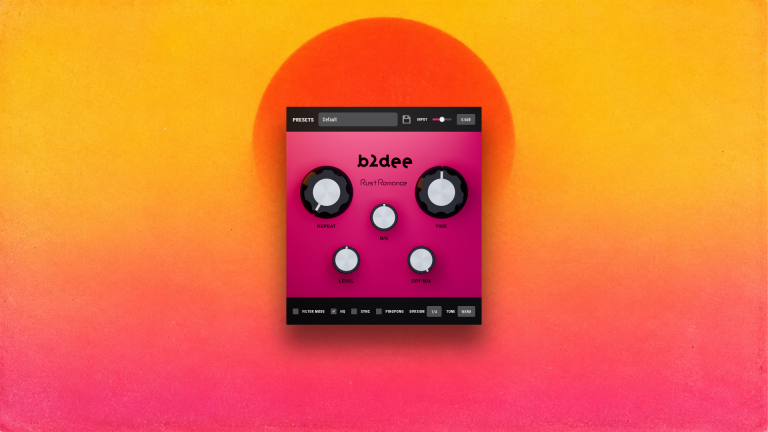
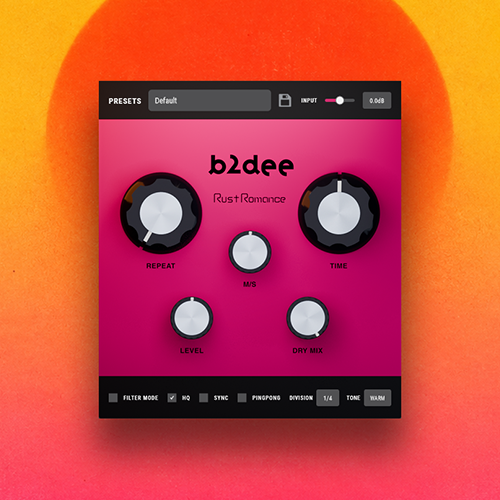
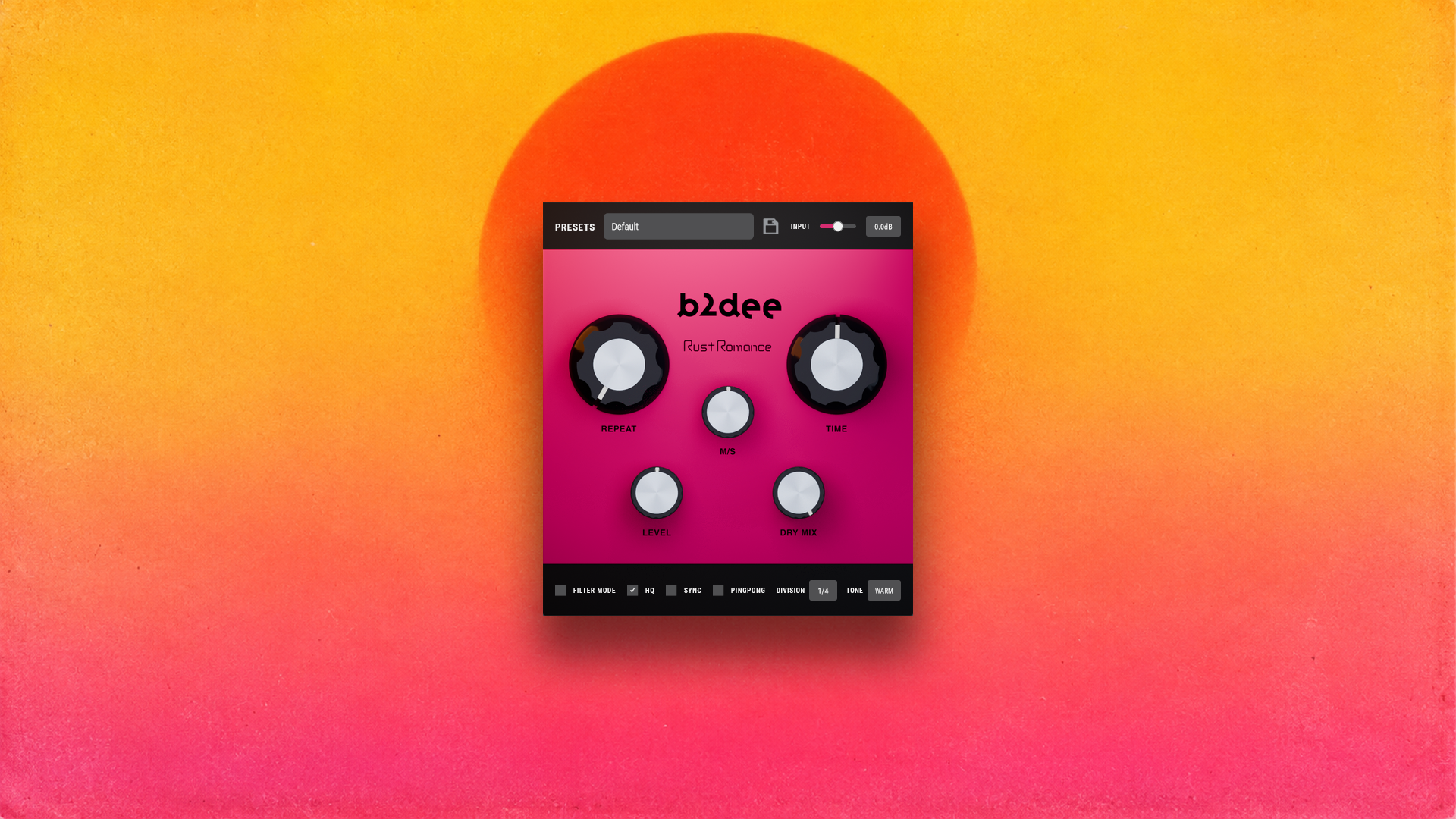
In fact, one of our own Rust Romance products, B2DEE, was inspired by the BOSS DM-2.
But whenever I develop a plugin, the first thing I do is dive into research and documentation. Thoroughly.
The reason I describe B2DEE as “inspired by the DM-2” is that it doesn’t sound exactly like the original hardware.
And by “inspired,” I don’t mean something like, “Hey, the UI is the same color!” or “Wow, those knobs look almost identical!”
Nor do I mean, “Didn’t it sound something like this? Yeah, close enough, right?”
That’s not what inspiration means to me.
When I first started developing B2DEE, my original concept was to recreate the DM-2 as faithfully as possible in plugin form.
But as I worked through the schematics and component configurations, I inevitably ran into situations where I had to simplify certain parts of the processing.
That’s the reality of hardware emulation.
You can advertise something as an “incredibly realistic recreation of the original hardware” all you want. But there’s a reason why even UAD plugins don’t sound exactly identical to their hardware counterparts: perfectly reproducing every aspect of the original hardware’s behavior would require so much CPU processing that it would become impractical.
Another thing I’ve often noticed is that plugins modeled after equipment like the 1176 or LA-2A sometimes have a more exaggerated character than the original hardware.
The compression can be more dramatic, the effect more obvious. It’s almost as though the sound has been deliberately caricatured.
And suppose you successfully digitize the behavior of an operational amplifier. What about the sonic characteristics of the capacitors and resistors surrounding it?
Are you going to model all of those too?
I don’t think incorporating every one of those details into a practical plugin is particularly realistic.
So, yes, I use the word “inspired” for B2DEE, especially since it includes features that aren’t present in the original hardware.
However, I spent an enormous amount of time researching and documenting the behavior of BBD components. I also examined the circuit schematics in detail, trying to make sure that the result genuinely sounded like a BBD delay in the spirit of the DM-2.
To me, that’s what developing a plugin based on real hardware is all about.
Collecting circuit diagrams, digging through component datasheets, measuring actual hardware, and so on.
Of course, there are plenty of plugin manufacturers that have access to the original equipment and still produce plugins that sound absolutely nothing like it.
And I don’t necessarily think there’s only one correct approach here.
Ultimately, I think the important questions are how much CPU the plugin consumes and whether people actually enjoy the sound, even when the developer has added some deliberate coloration.
Anyway, I digress.
The problem with MAME-based plugins is that, fundamentally, what you’re reproducing is the ability to run various functions through emulated hardware.
And when I looked through some of the publicly available source code, I found a surprising number of comments that essentially amounted to, “Well, I listened to it and figured this sounded about right.”
Which made me wonder: What exactly are we claiming to have recreated here?
I genuinely thought that porting MAME into a VST plugin could be an incredibly easy way to create something cool.
But after reading through the internals and understanding what was actually happening, I realized that what MAME could offer me was the ability to reproduce how an operating system works, or to provide the same features as the original machine.
It wasn’t really a shortcut to reproducing the sound of the actual hardware.
Not at all.
So, Sometimes the Long Way Around Is the Shortest Way
At first, I thought I’d found an incredibly easy way to achieve something extraordinary.
But in the end, what I actually want isn’t just a sound that vaguely resembles the original.
I want something that genuinely satisfies my own ears.
Naturally, I think there’s a gap between hardware and plugins that can’t be completely eliminated.
But here’s something interesting: once you’ve recorded the output of a hardware device into your DAW, sometimes the difference turns out to be surprisingly insignificant.
There’s a pretty deep rabbit hole here.
Whenever I do blind tests with my sound engineer friends, we usually end up feeling a little depressed about the results.
Anyway, I’m getting sidetracked again.
For example, the thing I’ve probably spent the most time researching is how to develop plugins capable of producing sounds similar to those of vintage hardware samplers.
But even with the actual hardware sitting in front of you, and even with the schematics available, I often find myself wondering whether a truly complete analysis is even possible.
There are inevitably sections where the information simply isn’t available.
You end up with these metaphorically blacked-out areas, and sometimes you have no choice but to fill in the blanks by listening and making judgments.
Then there’s the variation between individual units, the effects of aging, and the very real possibility that different production batches used different components.
And after more than ten years, electrolytic capacitors can be in pretty rough shape.
If you pursue “realism” too aggressively, you also end up putting an enormous burden on the CPU and potentially introducing significant latency.
And yes, I’m well aware that our own plugins aren’t exactly the lightest on CPU usage.
Now, if you don’t think particularly deeply about sound, the first things that probably come to mind are parameters like frequency response and THD.
But the number of subtle acoustic characteristics that real equipment can produce is absolutely ridiculous.
Seriously, there are so many.
There Are Plenty of Other Misconceptions, Too. Take REA, for Example.
Another technology that’s frequently misunderstood, besides MAME, is the recently popular REA.
For example, there’s a story going around about Adobe-compatible applications being created using REA.
But those applications weren’t actually developed by analyzing Adobe’s original software.
There was no reverse engineering of Adobe’s applications involved.
Lately, I’ve also been seeing a frankly ridiculous number of supposedly “REA-reverse-engineered audio plugins” being released.
But I really don’t think it’s that easy.
I’ve actually experimented with REA myself, and my conclusion was that recreating the exact same application as the original is practically 100% impossible.
Sure, you might be able to extract certain parameters.
I also use AI to write source code and organize research materials.
But here’s the problem.
AI lies. A lot.
And as if lying weren’t enough, sometimes it even hides things from you.
Yes. Sometimes the long way around really is the shortest way.
For all you know, you might be eating a hamburger made from ground-up Martians.
So just because AI can write source code and perform calculations incredibly quickly, that doesn’t mean you should blindly approve everything it produces.
Keep doing that, and before you know it, you’ll be eating tacos filled with some completely unidentified meat.
Anyway, back to REA.
The AI will tell you that it has completed the analysis.
It’ll confidently explain, “This part works like this, and that part probably behaves like that.”
But these things are liars, remember?
I wouldn’t be surprised if they hadn’t properly analyzed half of it.
And I suspect this is exactly what’s happening behind some of the current REA craze.
A certain amount of genuine reverse engineering gets done.
Maybe a few parameters are successfully extracted.
Then the AI starts saying, “Well, I think the rest probably works something like this.”
And when it comes time to actually develop the software, the vibe coder is probably just approving everything without thinking too hard about it.
That means they’re also approving all the parts where the AI has simply imagined how the unexplored sections should work.
And then the AI and the vibe coder get incredibly excited.
“Look what we made! This is amazing! And we built it so quickly!”
But unless you’ve properly audited the results, that’s not a software clone at all.
It’s something else entirely.
I wouldn’t want to use something that mysterious for mastering. Absolutely not.
Maybe in a mix, sure. But for mastering-grade processing? No thanks.
We Actually Take This Stuff Seriously
Rust Romance could release 50 slop plugins in a single night too, you know.
We’ve got Claude Code and Codex, after all. lol
But we actually take plugin development pretty seriously.
Even with the speed improvements AI provides, I can’t develop an entire plugin in a day.
A month would be fast. Sometimes it takes three months, and that’s perfectly normal.
B2DEE took three months to develop.
These days, there are vibe coders, AI, REA, MAME, and all sorts of products and technologies that encourage consumers to dream a little too big about what they’re getting.
But at Rust Romance, we spend a lot of time researching and determining the behavior of individual components.
And we do a lot of listening tests, too.
Sure, sometimes an idea can become reality at an astonishing speed.
But those are exceptions, usually when the implementation happens to be relatively simple compared to the idea itself.
I mean, I thought all of this used to be pretty obvious.
But apparently, we now live in an era where developers actually have to go out of their way to explain these things publicly.
Because there are quite a few idiots on YouTube saying things like:
“I made an AMAZING audio plugin with Claude Code in just 30 minutes!”
And every time I see that, I think:
Fine. Then you should never buy another plugin for the rest of your life.
No FabFilter. No Waves. No UAD. No Valhalla.
All banned.
From now on, you have to vibe-code every single plugin yourself and use nothing but those plugins for all your mixing.
And if you don’t like that idea, then maybe the plugin you made in 30 minutes isn’t actually “amazing” at all.
Because that thing is probably made of Mexican salamander bacon.
I mean, there are plenty of people who will do absolutely anything to get views.
And when it comes to AI, it seems like people mostly fall into one of two camps: those who hate it without understanding what it actually does, and those who wildly overestimate its capabilities.
But to me, it’s really not all that different from no longer having to tighten screws manually with a screwdriver.
Of course, the arrival of AI is groundbreaking. It’s an extraordinary technological development.
But saying things like “Software companies will become completely unnecessary!” is an extreme exaggeration.
And on the other hand, declaring “AI does nothing but lie! It’s completely useless!” is just as extreme.
The more you actually work with these tools, the more you understand what they’re capable of.
They’re pretty damn impressive, I’ll give them that.
But I’ll leave you with one final observation:
If you don’t keep a very close eye on them, they’ll probably start committing crimes.
See you around.